 By
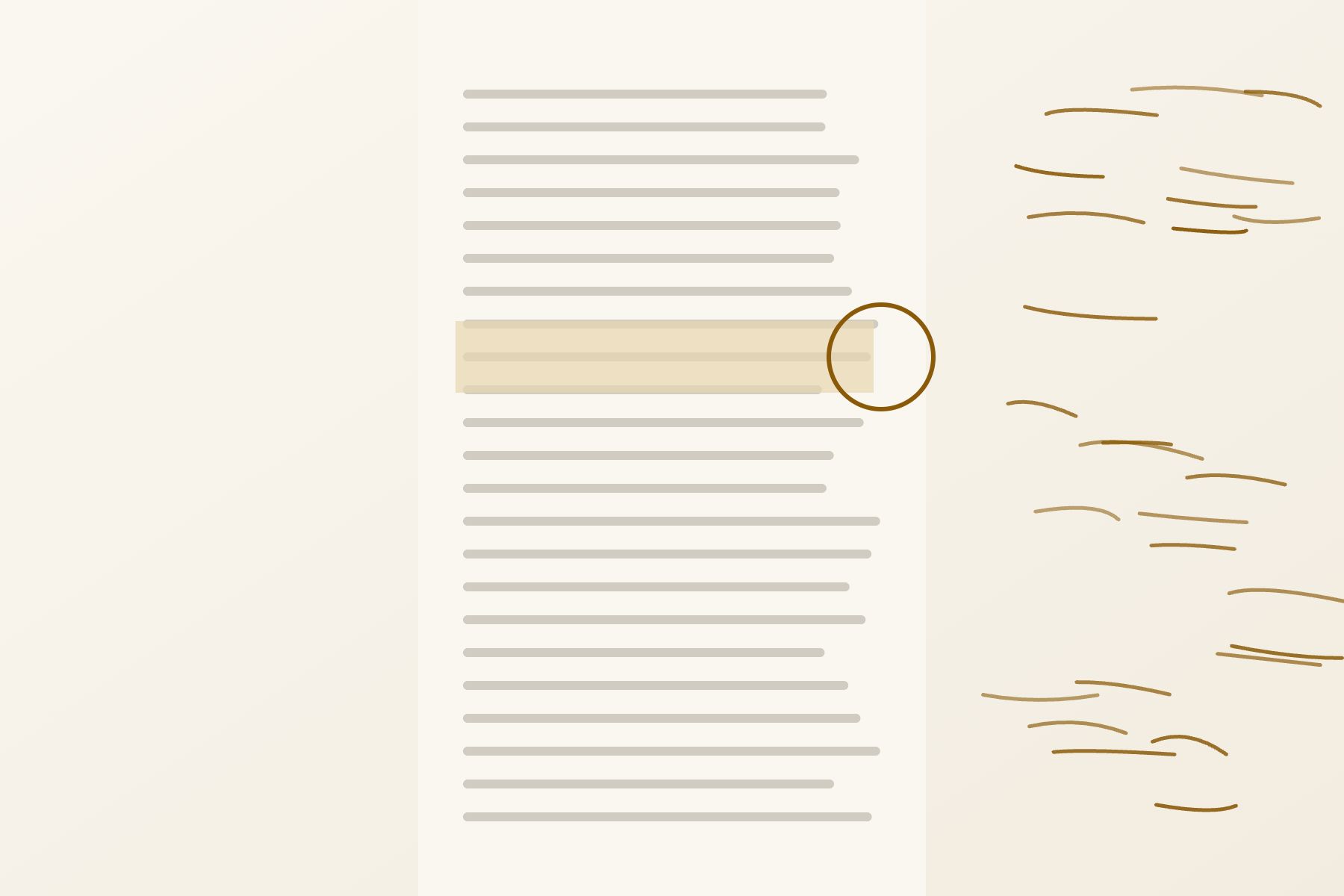
The copy of Montaigne I bought for two pounds came with a second reader already inside it. Someone had underlined, in soft pencil, almost every passage about friendship and almost none about death. Halfway through the third book the underlining stops.
I have no idea who they were. But I know what they were looking for, and I know roughly where they put the book down.
Two books at once
Marginalia turns a printed book into a correspondence. The author speaks; the reader answers, briefly and often rudely. "No." "Surely not." "See p. 112." A double line beside a paragraph is a raised hand. An exclamation mark is a laugh you were not meant to hear.
A clean copy tells you what the book says. A used one tells you what it did to somebody.
Libraries have started to collect annotated copies for exactly this reason. Historians read the margins of old almanacs and schoolbooks to learn how people actually used them, not how they were meant to.
Writing back
I used to keep my books pristine. Now I write in them, lightly and with a pencil, the way you might talk quietly in a reading room. Partly it is for me: the notes are a map of where my attention went. Partly it is for whoever buys the book after me.
If you find this essay in a secondhand shop one day, printed out and folded into something else, feel free to argue with it in the margin.


I once found a pressed four-leaf clover in a library copy of Persuasion, at the page where Anne reads the letter. I have never known whether that was a joke or a blessing.
Both, I hope. That is a wonderful find.
Counterpoint from a librarian: please use pencil, and please not in our copies. Your own, though? Go for it.